product design specialisation
The Product Design Specialization at CARE School of Design, an AI-Integrated Design College in Trichy, empowers students to become innovative designers, creative problem solvers, and future-ready professionals capable of designing functional, sustainable, and user-centered products for a rapidly evolving world. The program integrates creativity, technology, and design strategy to develop solutions that address real-world challenges and improve everyday experiences.
At CARE School of Design, students gain comprehensive knowledge in Product Design, Industrial Design, Design Thinking, Ergonomics, Materials and Manufacturing Processes, Sustainable Design, and User-Centered Design. The curriculum is carefully aligned with industry trends and emerging technologies, ensuring graduates are equipped with the skills required by global design industries.
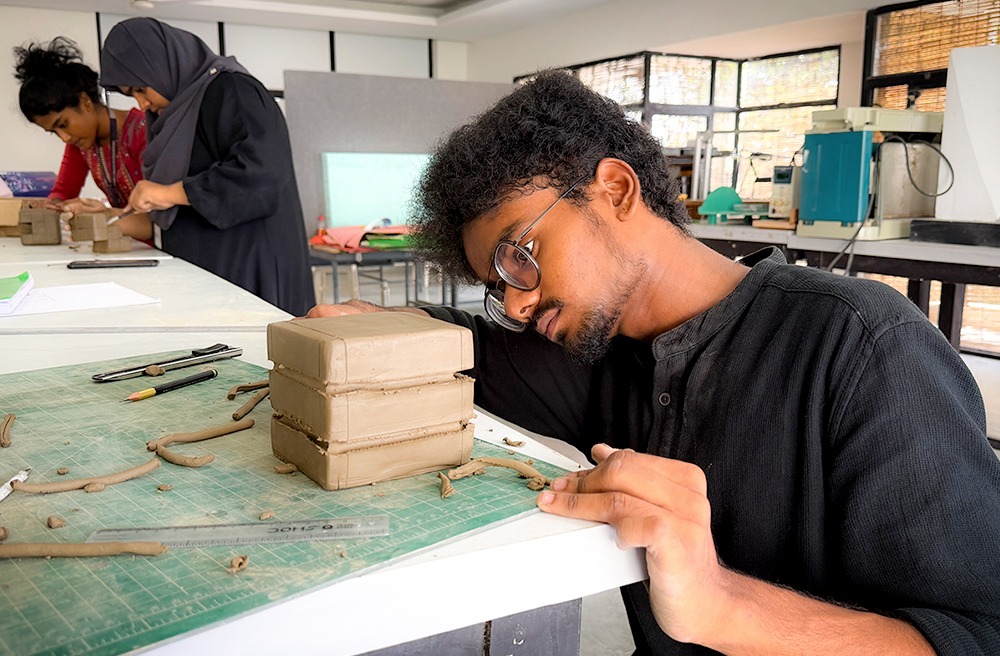
Through studio-based learning and experiential education, students participate in hands-on projects involving 3D modeling, rapid prototyping, CAD design, product visualization, physical model making, and design research. These practical experiences enable learners to transform ideas into innovative products that balance functionality, aesthetics, usability, and sustainability. The program emphasizes the application of human-centered design principles, encouraging students to conduct user research, analyze consumer needs, and develop products that create meaningful user experiences. With access to advanced workshops, fabrication labs, and industry-standard tools, students build strong competencies in sketching, digital modeling, prototyping, and manufacturing techniques.
Graduates of the Product Design Specialization at CARE School of Design are prepared for diverse careers as Product Designers, Industrial Designers, Design Researchers, Innovation Consultants, UX/Product Strategists, and Entrepreneurial Designers, contributing to industries such as consumer products, mobility, healthcare, technology, and sustainable innovation.
The Product Design Specialisation at CARE School of Design prepares students for exciting careers in product innovation, industrial design, and user-centred product development. Graduates can pursue roles as Product Designers, Industrial Designers, Design Researchers, Innovation Consultants, UX/Product Strategists, Design Managers, Furniture Designers, Packaging Designers, Service Designers, and Entrepreneurial Designers. With industries increasingly focusing on innovation, sustainability, and user experience, professionals skilled in product development, design thinking, prototyping, ergonomics, manufacturing processes, and design research are highly sought after across consumer products, mobility, healthcare, technology, retail, and emerging startups.
Students gain hands-on experience with industry-standard tools and technologies used in product design and industrial design. The curriculum includes exposure to Rhino 3D, Fusion 360, AutoCAD, Adobe Illustrator, Adobe Photoshop, rendering software, prototyping tools, fabrication equipment, AI-assisted design workflows, and digital visualization platforms. These tools enable students to develop concepts, create prototypes, visualize products, and prepare designs for manufacturing and production.
What is Product Design?
Product Design is the process of creating functional, user-centred, and innovative products that solve real-world problems while balancing aesthetics, usability, sustainability, and manufacturing requirements.
Is Product Design a good career in India?
Yes. Product Design is one of the fastest-growing creative and innovation-focused professions, with opportunities across technology, consumer products, healthcare, mobility, and manufacturing industries.
Can I study Product Design after 12th?
Yes. Students from any stream who possess Maths, Physics and Chemistry can pursue a Bachelor of Design (B.Des) in Product Design after completing their 12th standard.
What is the difference between Product Design and Industrial Design?
Industrial Design focuses on the physical form and manufacturability of products, while Product Design combines user experience, functionality, innovation, business goals, and sustainability.
What software is used in Product Design?
Students learn Rhino 3D, Fusion 360, AutoCAD, Adobe Illustrator, Adobe Photoshop, rendering software, and prototyping tools used by product designers worldwide.
What career opportunities are available after Product Design?
Graduates can work as Product Designers, Industrial Designers, Design Researchers, Innovation Consultants, Product Strategists, Furniture Designers, Packaging Designers, and Entrepreneurial Designers.
What skills will I learn in Product Design?
Students develop expertise in design thinking, ergonomics, prototyping, CAD modelling, manufacturing processes, product visualization, design research, and innovation strategy.
Does CARE School of Design provide practical learning opportunities?
Yes. Students participate in workshops, prototyping activities, fabrication projects, industrial visits, live projects, and portfolio development exercises.
What industries hire Product Designers?
Product Designers are employed by technology companies, manufacturing firms, healthcare organizations, consumer product brands, startups, automotive companies, and innovation consultancies.
Why choose CARE School of Design for Product Design?
CARE School of Design offers an AI-integrated B.Des program, expert faculty, prototyping facilities, industry-focused learning, workshops, and hands-on projects that prepare students for careers in product innovation and design.
Explore Other Specialisations