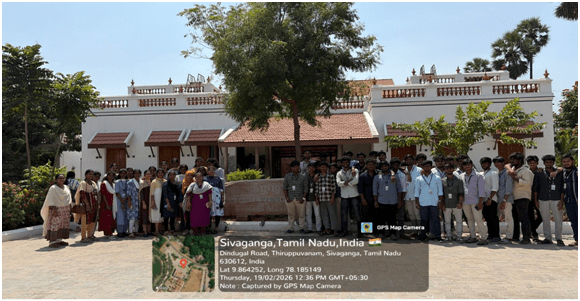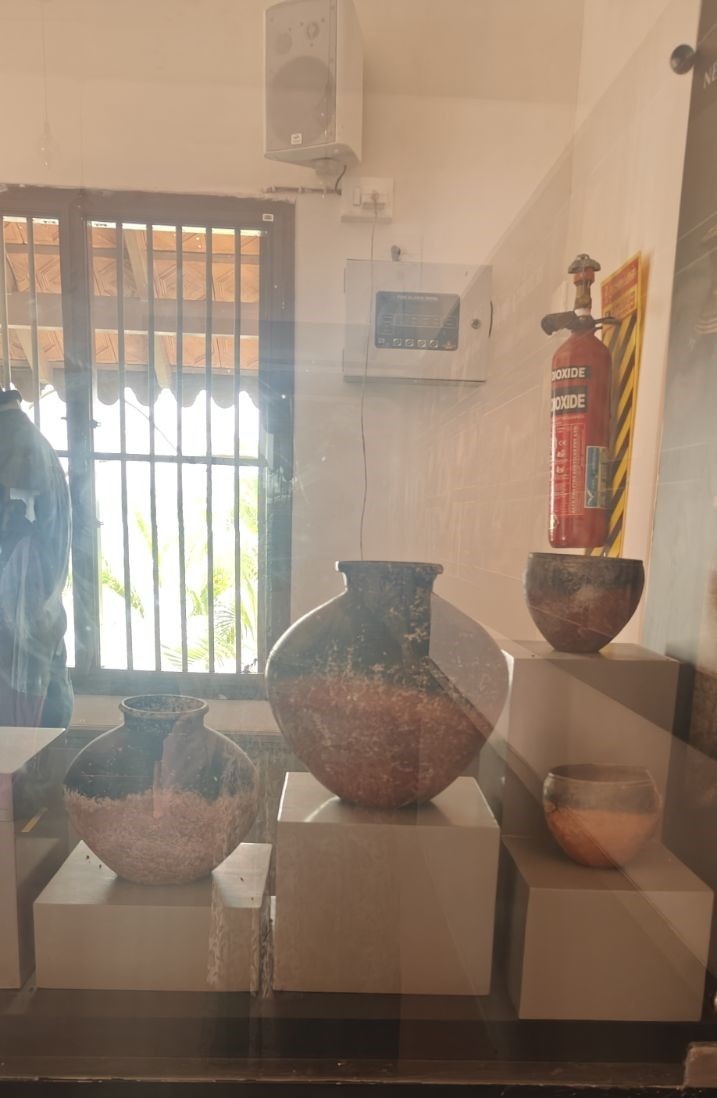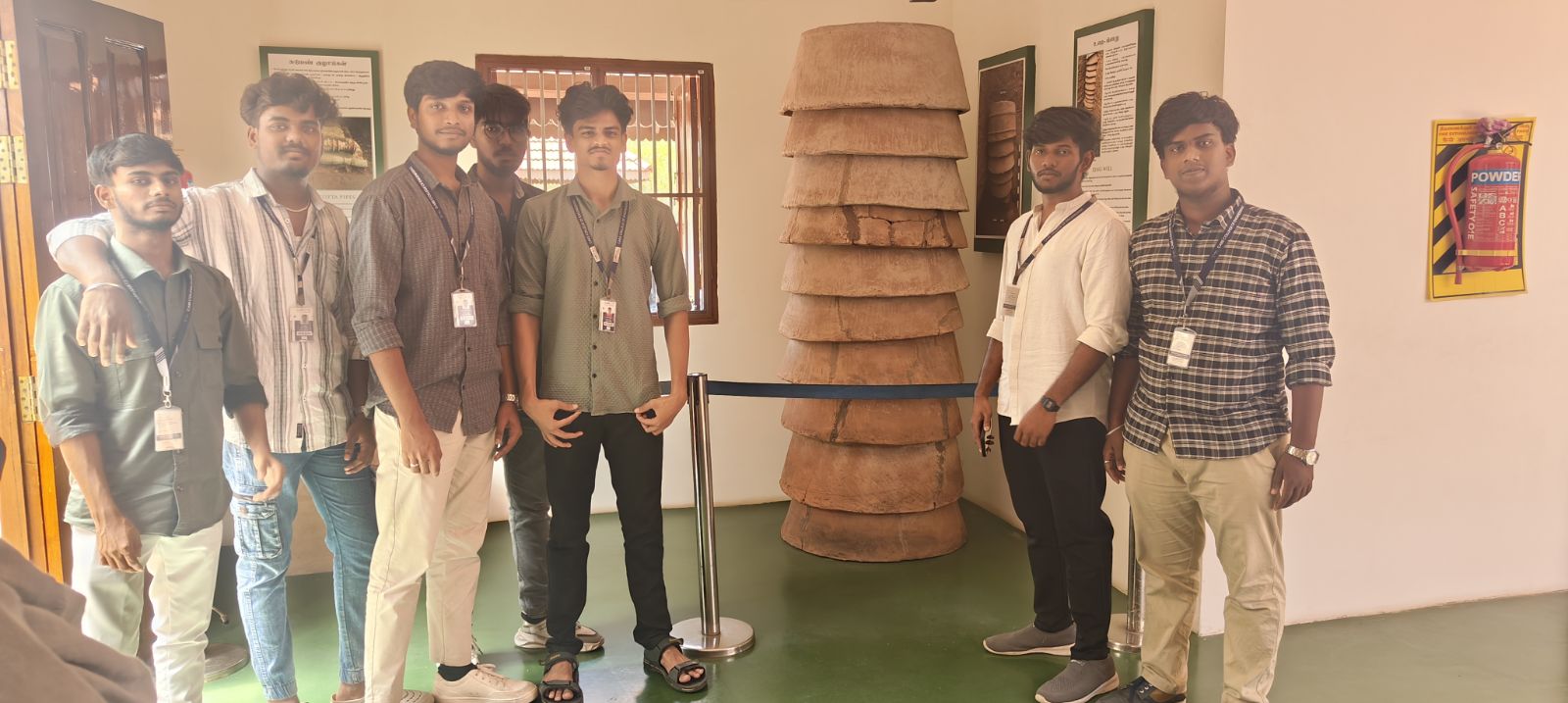
An academic field visit was organized to the archaeological excavation site at Keeladi, Madurai, as part of the curriculum focusing on Indian Knowledge Systems (IKS). The visit aimed to provide experiential learning by connecting theoretical classroom knowledge with material archaeological evidence of early urban civilization in South India.
The Keeladi excavation site represents a well-planned ancient settlement showcasing technological awareness, literacy, craftsmanship, water management systems, and organized habitation patterns dating to the early historic period.
| Observation | Related SDG Goal | Relevance |
|---|---|---|
| Water drainage systems | SDG 6 – Clean Water and Sanitation | Ancient sanitation and water conservation |
| Sustainable settlement planning | SDG 11 – Sustainable Cities and Communities | Organized and eco-friendly habitation |
| Indigenous manufacturing | SDG 9 – Industry, Innovation and Infrastructure | Early technological innovation |
| Resource utilization | SDG 12 – Responsible Consumption and Production | Efficient material usage |
| Knowledge preservation | SDG 4 – Quality Education | Heritage-based experiential learning |
| Environmental harmony | SDG 13 – Climate Action | Adaptation to local ecological conditions |
Students gained interdisciplinary awareness linking archaeology with modern engineering concepts. The visit also encouraged documentation-based learning and promoted appreciation of India’s scientific heritage within contemporary technological education.